
 Every movement, sensation and thought relies on the nervous system. Yet factors including age, injury, illness and cognitive changes can affect how signals travel between the brain, spinal cord and nerves. When those signals are disrupted, patients may experience pain, limited movement or difficulty processing information.
Neurological rehabilitation is a broad, patient-specific group of treatments that helps restore these functions. Whether you are recovering from a stroke, have been diagnosed with a progressive condition or are managing chronic nerve pain, Avon Health Center’s skilled professionals can help guide care for yourself or a loved one.
What Should You Know About Neuro Rehab?
Damage or changes to the brain, spinal cord and nerves can alter how the nervous system sends and receives signals. Touch may feel numb, movement in your arms or legs may become restricted, and communication can be more of a challenge.
Neurological rehabilitation helps retrain your brain and body to help patients manage, improve or strengthen functions affected by a neurological condition, injury or change in cognitive health.
Why Might a Doctor Refer You for Neuro Rehab?
Your doctor may refer you to neuro rehabilitation for:
- Recovery from a stroke or another major life-changing incident
- Surgical recovery
- Slowing the progression of mild cognitive impairment or Alzheimer’s disease
- Restoring or improving movement, balance and strength
- Adapting activities of daily living (ADLs)
- Staying active on your terms and managing risks for chronic conditions
- Improving hand-eye coordination and addressing vision changes
What Does Neurological Rehabilitation Include?
At Avon Health Center, a team of therapists will develop a personalized care plan focused on restoration, recovery and adaptation. Your treatment may include:
- Engaging related muscle groups
- Increasing flexibility and range of motion
- Developing adaptive strategies
- Improving cognitive function
- Easing pain and discomfort
Which Conditions Benefit from Neuro Rehab?
Neurological rehabilitation is integral to the recovery or management of the following conditions:
- Alzheimer’s disease, dementia, mild cognitive impairment and other cognitive or memory disorders
- Strokes, cerebral hemorrhages, brain aneurysms and vascular disorders
- Brain tumors, encephalitis, traumatic brain injuries and other neurological disorders
- Parkinson’s disease, Huntington chorea, dystonia, seizures and other episodic or movement disorders
- Multiple sclerosis, Amyotrophic Lateral Sclerosis (ALS), Charcot-Marie-Tooth (CMT), neurofibromatosis, neuropathy and other neuromuscular conditions
- Balance disorders, spinal cord injuries and herniated discs
What Can You Expect During Neuro Rehabilitation?
The brain is constantly adapting to new information. During neurological rehabilitation, your treatment plan is meant to help re-engage or establish brain-body connections that support recovery.
You might practice familiar tasks to build muscle memory or learn new strategies that help you move, communicate and complete daily activities more safely.
What Happens During an Assessment?
Our neurological specialists examine how your body moves, senses information and responds. We also assess cognitive health for memory, concentration and the ability to process information.
These observations allow us to determine where and how you need assistance with:
- Activities of daily living
- Movement and balance
- Muscle control and flexibility
- Speech and communication
- Diet and nutrition
- Cognitive health
- Stress and mental health
- Pain management
- Job and home adaptations
- Assistive devices
What Happens During Treatment?
Based on your care plan, you’ll meet regularly with the following professionals:
- Physiatrist: Oversee your rehabilitation plan with a focus on restoring function, managing pain, improving mobility and coordinating therapy recommendations throughout your recovery.
- Occupational Therapist: Improve your coordination, muscle memory, strength and control. Regimens may also focus on cognitive health or performing ADLs.
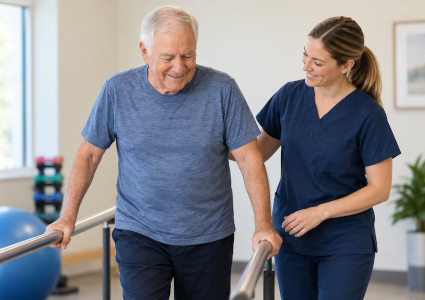
- Physical Therapist: Work on movement, coordination and stability during sessions that incorporate strength, flexibility, balance and gait training or instruct you in assistive devices.
- Speech Therapist: Practice enunciation, swallowing and adaptive communication with a dedicated speech-language pathologist.
- Neuropsychologist: Talk with a psychologist about how you feel during this major life change. They’ll listen and guide you forward with stress management and cognitive strategies.
- Recreational Therapist: Learn to exercise and keep healthy on your terms. You’ll be directed toward routines that support your recovery and manage your risks for heart disease, diabetes and other chronic conditions.
Wherever you are in your recovery, Avon Health Center is dedicated to helping you regain your independence.
To learn more about our Short-Term Rehab Services
Contact Us Today



