

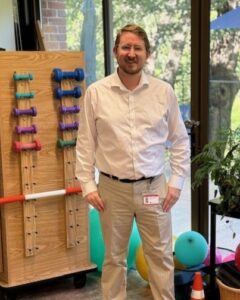
Dr. Brian Brady, In-House Physiatrist
We all experience pain throughout our lives. But there often comes a point, especially as we age, when persistent achiness, throbbing, pins-and-needles sensations or brain fog linger longer than expected.
These symptoms are more than a minor inconvenience. Ongoing pain can slow surgical recovery, limit mobility and interfere with relationships, independence and even employment.
Medical professionals have approached pain management in different ways over the years, ranging from prescribing medications to promoting mindfulness practices and lifestyle changes.
More recently, care has shifted toward physiatry, a medical specialty that takes a whole-body approach to pain. Rather than focusing on symptoms alone, physiatrists work to understand the source of pain and its broader impact. Using these insights, they develop personalized treatment plans that support movement, symptom management and overall quality of life.
Because of this broad scope, doctors often refer patients to physiatrists for injury recovery, post-surgical rehabilitation, chronic pain management and adaptations for activities of daily living (ADLs). If you’re unfamiliar with this specialty, here’s what physiatry involves and how it shapes care at Avon Health Center.
What Is Physiatry?
Pain is deeply personal. Many patients can recall exactly when their symptoms began, have routines built around avoiding triggers, and long for the comfort and confidence of life before pain.
As these overlapping factors become clearer, the medical community has recognized that no single treatment works for every patient. Physiatry is built on this understanding. Key principles include:
- An integrated view of pain: Physiatry explores how the nervous system, muscles, joints, skeletal structure and brain interact to influence pain and function.
- Broad clinical applications: Pain may arise following an injury, during surgical recovery or as part of a chronic condition. Physiatry adapts care plans across these scenarios to improve flexibility, performance and independence.
- Holistic pain management: Chronic pain often affect emotional well-being. Physiatrists consider both the physical and psychological effects of pain, addressing how it impacts mood, motivation and social engagement.
Conditions That Benefit From Physiatry
At Avon Health Center, your physician may recommend physiatry for:
- Stroke recovery
- Injury or accident rehabilitation
- Chronic pain management
- Post-surgical recovery
- Age-related functional changes
Based on these needs, a physiatrist may help treat:
- Arthritis
- Back and neck pain
- Chronic pain syndromes
- Herniated discs
- Joint disease
- Hip or knee replacement recovery
- Musculoskeletal disorders
- Neurological disorders
- Osteoporosis
- Spinal cord or traumatic brain injury
- Sports-related injuries
- Cancer-related pain or functional decline
What to Expect During a Physiatry Visit
Avon Health Center offers in-house physiatry services, with Dr. Brady from American Physiatry onsite twice each week to evaluate our residents, develop treatment plans and address ongoing rehabilitation and pain management needs.
During your appointment, the physiatrist will evaluate your physical abilities, limitations and overall health. You’ll be asked about current symptoms, medical history and any previous treatments. Your provider may assess gait, strength, coordination and reflexes, and recommend imaging or diagnostic tests to better understand how your muscles, joints and nervous system are functioning.
Throughout the evaluation, the physiatrist considers how pain affects your ability to perform ADLs, maintain employment and participate fully in daily life. Using this information, your provider develops a non-surgical, minimally invasive care plan tailored to your needs.
Therapies
Your treatment plan may include:
- Physical, occupational and speech therapy
- Injection-based treatments, such as steroids, nerve blocks or regenerative therapies
- Nerve stimulation
- Heat and ultrasound therapy
- Strength and endurance training to support weakened muscle groups
- Learning to use assistive devices
- Acupuncture or dry needling
- Osteopathic manual medicine (OMM)
- Counseling and mental health support
Lifestyle Considerations
Your physiatrist may also address factors that influence recovery, including:
- A history of smoking
- Weight and body mechanics
- A sedentary lifestyle
- Home environments that limit safe movement
Chronic Pain Management
When pain becomes long-standing, a physiatrist works to identify why the body continues to signal discomfort. This may involve examining nerve responses, muscle imbalances, circulation issues or injuries that haven’t fully healed.
Rather than masking symptoms, treatment may focus on:
- Improving flexibility through tissue-based therapies, massage or targeted injections
- Supporting circulation and tissue health
- Addressing wounds or injuries stuck in the inflammatory phase
- Evaluating nervous system responses to pain
- Building core and pelvic strength to improve stability and support movement
Avon Health Center is committed to helping patients live healthier, more independent lives. Whether you’re planning a short-term stay or exploring long-term care for a loved one, contact us to learn more about our services and how physiatry can support your recovery.